How to Plan a Piazza-Centered Day in a Small Italian Town
Small Italian towns keep their best hours in the square. Not in the museum with the single dusty altarpiece, not in the church that opens at unpredictable times, but in the piazza, where the same handful of people greet each other three times a day and the light moves across the stones in a way that quietly tells you the hour.
Planning a day around that square is less about filling time than about borrowing the town's rhythm. You will still see things and eat well. But when the day is anchored to one place, you stop rushing between sights and start noticing what's actually in front of you: the man arranging peaches into a pyramid, the two old friends arguing about football on a bench, the barista who starts your coffee before you finish asking for it.
Start With the Square, Not the Guidebook
Arrive in the morning and walk the perimeter of the piazza before you do anything else. It takes four minutes and tells you most of what you need: which bar has the most people standing at the counter, where the town hall and the pharmacy are, which corner catches the shade after lunch, and whether there's a notice board with posters for the week's market, festa or concert.
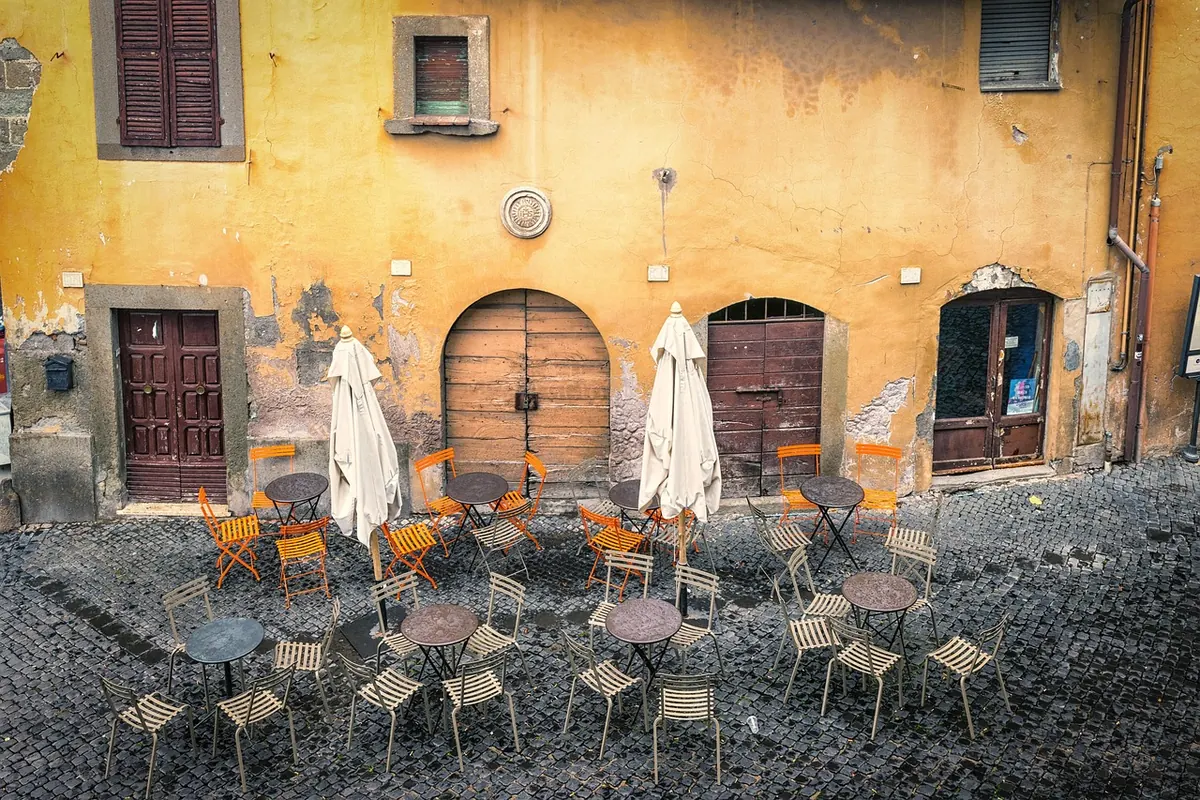
Look for the practical furniture of the square as well — the fountain, the benches, the steps in front of the church, the tabacchi that sells bus tickets and stamps. These are the places the day will keep returning you to. Sit for ten minutes. Resist the urge to photograph everything. You'll be back.
Morning: Coffee Standing Up, Then the Market
Begin at the bar, standing, the way locals do. A cappuccino before eleven is fine for visitors; after that, order an espresso and nobody will look at you twice. Drink it at the counter, watch who comes in, pay at the till when you're finished. This is your first lesson in the town's pace — nobody is being slow at you. They're simply not in a hurry.
Then find the market. Many small towns hold one once or twice a week, usually in or beside the main square, and it can transform a quiet piazza into something loud, crowded and wonderful within an hour of sunrise. Ask at the bar or check the posters: market days are not uniform across the country, and turning up on the wrong morning means missing the best of the town.
A few things worth knowing before you go:
- Bring cash and small notes. Card readers appear more often than they used to, but a fruit stall with a queue isn't the place to test it.
- Go early. The best produce and the shortest queues are before ten; by early afternoon the vans are packing up.
- Buy something for later. A few apricots, a peach, a wedge of pecorino and a piece of bread will carry you through the afternoon better than any café.
- Ask prices rather than pointing. "Quanto costa?" and "Un etto, per favore" (about a hundred grams) will get you a long way.
- Don't block the stall. Step aside once you've paid; the market has its own traffic rules.
Learn the Closing Hours Before You Need Them
This is the single most useful piece of planning you can do. In many small towns, shops, churches and small museums still shut for part of the afternoon, and restaurant kitchens close after lunch service. The exact hours vary by town, season and even by the individual shopkeeper, so read the sign on the door instead of trusting a timetable you found online.
The practical consequence: don't save the church with the frescoes for three in the afternoon and then feel cheated when the door is bolted. See it late morning, before the shutters come down. Save the middle of the day for lunch, shade and a slow walk, and let the town close around you for a couple of hours. That lull is not an inconvenience to be solved. It's the best part of the day, if you let it be.
Lunch: Sit Down and Stay Longer Than You Planned
Eat within sight of the square, but one street back if you can. The trattoria a hundred metres from the piazza is usually cheaper, calmer and better than the one with the laminated photo menu facing it. Look for a handwritten menu, a short list of dishes, and a room with people who clearly live nearby.
Take the fixed lunch menu if there is one. Ask what's good today — "cosa c'è di buono?" — and follow the answer. Order water, house wine, and a first course; add a second only if the first was good and you have nowhere to be. Then stay. Lunch here is not a refuelling stop, and the table is yours for as long as you want it. If you're visiting at the weekend or in high season, booking a table in the morning is a sensible five-minute phone call.
Afternoon: Shade, Side Streets, and One Nearby Sight
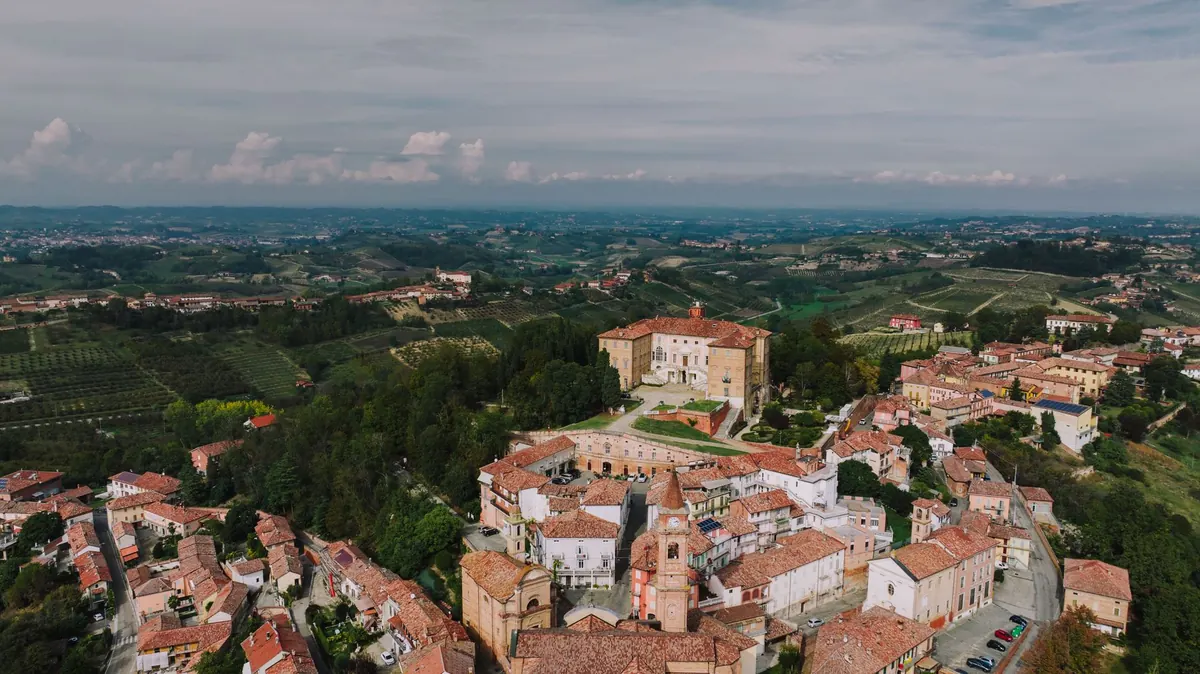
After lunch, walk. Every street leading off the piazza goes somewhere, and those radiating lanes are where the town shows its real face: laundry lines, workshop doors, a second smaller square you didn't know existed, a fragment of medieval wall built into a modern house. Look up at the facades. Small towns are best read from the first floor upward.
Then choose exactly one thing beyond the square. A viewpoint at the edge of town, a walk along the old walls, a small archaeological museum, a church with a fresco cycle, or a fifteen-minute drive to the next village. One, not four. The pleasure of a piazza-centered day comes from the fact that you're not spending it in a car or checking a watch.
Evening: The Piazza's Second Life
Around six-thirty or seven, the square changes character again. Aperitivo tables appear, someone puts out bowls of olives and crisps, and the passeggiata begins — the unhurried evening walk up and down the same short stretch, dressed a little better than an hour ago, stopping to talk every few metres.
Join it. Order a spritz or a glass of the local white, sit where you can see the square rather than the street, and give it an hour. Children chase each other around the fountain; grandparents supervise from benches; teenagers cluster at the far corner. Later, dinner — but later than you think, often from eight onwards. If you only do one thing on this day, make it this: a bench, no phone, nothing to accomplish.
A Workable Template for the Day
Treat this as a frame, not a schedule. Shift it to fit the market day, the season and your own appetite.
- 8.30 — Coffee standing at the bar, watching the town wake up.
- 9.00 — Walk the perimeter of the piazza; note the bar, the benches, the notice board.
- 9.30–11.30 — Market, if it's a market day; otherwise the morning streets and a second coffee.
- 11.45 — The church or small museum, before the midday closing.
- 13.00 — Lunch one street back from the square, unhurried.
- 15.00 — The lull: shade, a bench, a book, a nap.
- 17.00 — One nearby sight, or a slow wander through the side streets.
- 18.30 — Aperitivo on the piazza.
- 19.30 — Passeggiata.
- 20.00 onwards — Dinner, then one last turn around the square before bed.
Practical Notes Before You Go
A handful of small preparations make the day run smoothly. None of them are complicated, and all of them let you stop thinking about logistics and start paying attention.
- Check the market day and any local festa before you fix your dates; both can make or break a visit.
- Carry cash, including coins, and keep a little aside for the bar.
- Wear shoes that handle uneven stone. Cobblestones are charming for ten minutes and unforgiving for ten hours.
- Cover shoulders and knees if you plan to enter churches, and keep quiet if a service is under way.
- Refill a water bottle at the fountain rather than buying plastic; in most towns the public water is fine to drink.
- Park outside the historic centre and walk in — the lanes were not built for cars, and the signs telling you so are serious.
- Learn five phrases: buongiorno, per favore, grazie, quanto costa, and un caffè. They're worth more than any app.
- Ask before photographing people, especially at the market. A nod and a gesture is usually enough, and a refusal costs you nothing.
Then put the list away, order something small, and sit back down. The square will do the rest.
Photo: K / Pexels
You Might Also Like
A hour-by-hour guide to the Italian piazza, from the sweepers at dawn and the commuter crush to the gelato queue, the dinner tables and the last lingering customers.
A practical guide to opening conversations in an Italian piazza — the timing, the first sentence, the listening habits, and the graceful exit that turn a passer-by into a welcome presence.